Why Hypoxic Training (IHHT/IHT) Leaves Conventional Approaches Behind
Every January, the same ritual repeats itself:
New resolutions, renewed motivation, fresh hope. At the top of the list for many people is weight loss. Diets are tried, calories are counted, workout plans are created. Low carb, intermittent fasting, keto, detox—the options seem endless.
And yet, after weeks or months, many people experience the same outcome:
Progress stalls, weight plateaus, energy declines—and frustration grows.
This pattern is especially evident in individuals with metabolic syndrome. Because in these cases, the issue often runs deeper than “too many calories” or “not enough exercise.” The metabolism itself is out of balance.
This is precisely where a different approach is gaining increasing attention:
Intermittent Hypoxic Training (IHHT / IHT).
What Is Metabolic Syndrome—and Why Conventional Approaches Often Fail
Metabolic syndrome refers to the simultaneous presence of several risk factors, including:
- Abdominal obesity
- Insulin resistance or elevated blood glucose
- High blood pressure
- Dyslipidemia (elevated triglycerides, low HDL cholesterol)
This combination significantly increases the risk of type 2 diabetes, cardiovascular disease, and other chronic conditions.
The core problem:
The body exists in a state of chronic metabolic dysregulation. Mitochondria function inefficiently, insulin signaling is impaired, and fat oxidation and energy production are disrupted.
In this context, many standard interventions have limited impact:
- Calorie restriction often lowers resting metabolic rate even further
- Intense exercise may not be feasible or sustainable
- Diets can exacerbate hormonal adaptations
The metabolism begins to “push back.”
The Metabolism as a Trainable System – A Paradigm Shift
Modern metabolic research increasingly shows that metabolism is adaptable. It responds to stimuli, not just calorie intake.
One powerful evolutionary stimulus that is almost entirely absent from modern life is:
oxygen variability.
Our ancestors regularly experienced fluctuating oxygen levels—through altitude, cold exposure, physical exertion, and fasting. Today, we live in a constant, oxygen-rich, highly comfortable environment.
This is where Intermittent Hypoxic Training (IHHT / IHT) comes into play.
What Is Intermittent Hypoxic Training (IHHT / IHT)?
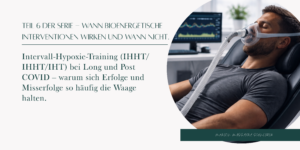
IHHT alternates phases of reduced oxygen availability (hypoxia) with phases of normal oxygen supply (normoxia). During the session, the patient lies comfortably and breathes an individually controlled oxygen mixture through a mask.
Important to note:
IHHT is not traditional altitude training and not a form of athletic performance training. The exposure is passive, controlled, and safely adjustable.
The goal is to trigger targeted cellular adaptation processes—particularly at the mitochondrial level.
Why IHHT Is Especially Effective for Metabolic Syndrome
1. Improved Mitochondrial Function
Mitochondria are the “power plants” of the cell. In metabolic syndrome, their function is often compromised.
Hypoxic stimuli activate, among other mechanisms:
- HIF-1α signaling pathways
- Mitochondrial biogenesis
- More efficient energy utilization
The result:
The body relearns how to produce and use energy effectively.
2. Positive Effects on Insulin Sensitivity and Glucose Metabolism
Studies and clinical observations indicate that IHHT can:
- Improve cellular glucose uptake
- Activate both insulin-dependent and insulin-independent pathways
- Reduce postprandial glucose spikes
For individuals with insulin resistance, this represents a crucial leverage point.
3. Support of Fat Metabolism Regulation
IHHT does not primarily work through “burning calories,” but through metabolic adaptation. The body becomes more metabolically flexible—a key factor for sustainable weight regulation.
Many users report:
- Improved fat mobilization
- More stable energy levels throughout the day
- Reduced cravings and hunger
4. Low Physical Strain – High Tolerability
One major advantage:
IHHT is non-invasive and does not require physical performance.
This makes it particularly suitable for:
- Individuals with severe obesity
- Patients with joint limitations
- People with low exercise tolerance
Where conventional training programs often fail, IHHT can serve as a gateway.
Why IHHT Is Not a “Miracle Cure”—But a Powerful Building Block
A realistic perspective is essential:
IHHT does not replace nutrition therapy, physical activity, or lifestyle change.
However:
It can prepare the metabolic foundation so that these interventions finally start working again.
Many New Year’s resolutions fail not due to lack of discipline—but due to biology. Intermittent hypoxic training addresses exactly that level.
Science, Experience, and Practice – Why Proper Education Matters
As IHHT gains popularity, responsibility increases as well. Not every protocol is appropriate, not every population benefits equally, and incorrect application can reduce or negate desired effects.
What’s needed:
- A solid understanding of physiology
- Individualized protocols
- Clear indications and contraindications
Only then does IHHT become a credible therapeutic tool rather than the next short-lived trend.
Rethinking New Year’s Resolutions: Sustainability Over Diet Cycles
Perhaps this year is the right time to redefine New Year’s resolutions:
Not “rapid weight loss,” but metabolic health.
Not another diet—but targeted physiological adaptation.
IHHT offers a compelling, evidence-based approach.
Professional Training: Applying IHHT Safely and Effectively
For therapists, physicians, coaches, and health professionals who want to integrate IHHT/IHT into their practice in a structured and responsible way, the online course:
“IHHT/IHT Coaching Intensive with Dr. med. Egor Egorov”
offers comprehensive, practice-oriented training—from physiological foundations to safe application in metabolic conditions.
🎓 50% discount until January 31, 2026
🎁 Code: NEWYEAR26
👉 Course link:
ihht-coaching-intensive course
Conclusion
Metabolic syndrome is complex—and it deserves intelligent, multifactorial solutions. Intermittent hypoxic training is not a substitute for lifestyle change, but a powerful amplifier.
For many New Year’s resolutions, the key may not lie in the next diet—but in a new understanding of metabolic training.
Marion Massafra-Schneider